The Seven Great Anunnaki Gods: Roles, Rivalries, and the Shaping of Humanity


The Anunnaki Series Part: 2
The Anunnaki are among the oldest recorded gods in human history, appearing in Sumerian, Akkadian, Babylonian, and Assyrian texts more than four thousand years ago. Long before Olympian gods, Norse sagas, or biblical theology took shape, these deities formed a ruling pantheon that governed law, creation, death, justice, and power itself.
What makes the Anunnaki especially compelling is not mystery or speculation, but familiarity. They do not behave like abstract ideals. They behave like rulers. They argue. They compete. They make decisions that benefit some and devastate others. They protect humanity in one myth and threaten its survival in another.
✨ Learn more or book a Psychic Reading at GroundedPsychic.com
This article is a grounded historical and symbolic exploration of the seven primary Anunnaki gods, their roles, rivalries, and how their archetypes later reappeared across world religions. It does not claim hidden truth or dismiss modern faith. It invites discernment, literacy, and curiosity.
Pantheons evolve. Archetypes persist.
Who Were the Anunnaki?

In Mesopotamian cosmology, the Anunnaki were a divine ruling class rather than a single unified group.
Their name is often translated as “those of royal blood” or “offspring of Anu.” They were not omnipresent or morally perfect. They were administrators of cosmic and earthly order.
Ancient myth did not separate spirituality from governance. Religion functioned as theology, philosophy, and political explanation all at once.
As historian Samuel Noah Kramer observed:
“Mythology was the theology and philosophy of ancient man.”¹
For readers interested in the broader historical framework, see [Anunnaki Mythology Explained: Sumerian Origins and Cultural Context]
The Seven Primary Anunnaki Gods
Each of the following figures represents a core archetype that continues to appear across civilizations, religions, and psychological frameworks.
Anu
Supreme Authority, Sky Father, Divine Law
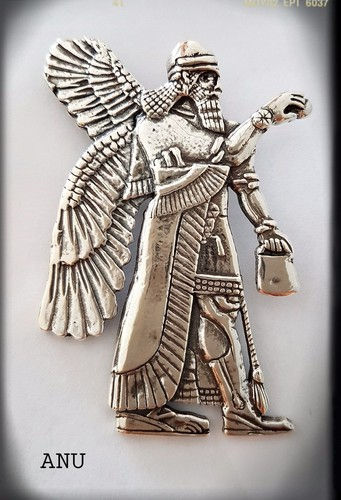
Anu sat at the top of the Anunnaki hierarchy. He ruled the heavens and embodied legitimacy, sovereignty, and divine law. Kings governed by his sanction, and cosmic order flowed from his authority.
Anu rarely intervened directly in human affairs. His power was distant, structural, and absolute. He delegated authority rather than exercising it personally.
This archetype later appears as Zeus, Odin, and aspects of the biblical God the Father. It is authority without intimacy, sovereignty without accountability.
For deeper exploration, see [Anu the Sky God: Divine Authority in Ancient Mesopotamia]
Enlil
Earth Administrator, Disciplinarian, Bringer of the Flood

If Anu represented authority, Enlil represented enforcement.
Enlil governed the earth, atmosphere, agriculture, and human order. In several myths, he views humanity as disruptive and excessive. His response to imbalance is control, not compassion.
Enlil is the god who authorizes the great flood, believing humanity has exceeded its purpose. His logic is administrative rather than moral.
Theologian Thorkild Jacobsen described the Mesopotamian gods as:
“Rulers, not moral exemplars.”²
Enlil’s archetype later emerges in wrathful sky gods, judgment-driven theologies, and flood narratives across cultures.
Read more here [Enlil and the Flood Myth: Power, Order, and Control]
Enki
Creator, Innovator, Protector of Humanity

Enki is the counterbalance to Enlil.
He is the god of wisdom, water, creation, and innovation. Enki participates directly in humanity’s formation and repeatedly intervenes to protect humans from destruction.
Rather than confronting authority openly, Enki works around it. He warns humanity of the flood indirectly, preserving life without violating divine law outright.
Assyriologist Jeremy Black wrote:
“Enki is the divine problem solver, the god who finds a way where none seems permitted.”³
His archetype later appears as Prometheus, Thoth, Hermes, and the bringer of forbidden or saving knowledge.
Explore further [Enki the Creator God: Wisdom, Water, and Human Survival]
✨ Learn more or book a Psychic Reading at GroundedPsychic.com Ninhursag
Earth Mother, Womb of Creation, Divine Healer
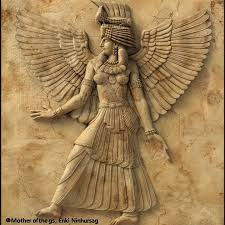
Ninhursag is the great mother goddess of the Anunnaki pantheon. She governs fertility, birth, mountains, and healing. She creates life and restores balance when creation goes too far.
In myth, when Enki’s unchecked creativity leads to harm, Ninhursag withdraws her healing power. When she returns, restoration becomes possible again.
She represents the truth that creation without care collapses.
Her archetype continues through Isis, Gaia, Demeter, and other earth mother figures who balance power with nurture.
Read more [Ninhursag the Earth Mother: Creation, Healing, and Balance]
The Seven Great Anunnaki Gods
Inanna
Power, Sexuality, War, and Political Ambition

Inanna is one of the most complex deities in ancient mythology. She rules love, sexuality, fertility, warfare, and political authority. She is ambitious, assertive, and unapologetically powerful.
Inanna takes power rather than inherits it. She wages war, claims domains, and descends into the underworld to confront death itself.
Later civilizations divided her archetype into separate goddesses, fragmenting sexuality from authority to make her more socially acceptable. Historian Diane Wolkstein described her as:
“A goddess who embraces the full paradox of power.”⁴
Explore the full depth here [Inanna Goddess of Power: Love, War, and Ambition]
Utu
Justice, Truth, and Moral Law

Utu, also known as Shamash, is the god of justice, truth, and moral illumination. He sees all actions clearly and judges based on truth rather than obedience.
Legal codes, including Hammurabi’s, invoke Utu as divine witness and authority.
Unlike punitive gods, Utu represents justice through exposure. Truth reveals. Judgment follows naturally.
Learn more[Utu the God of Justice: Law, Truth, and Illumination]
Ereshkigal
Death, Transformation, and the Sovereignty of the Unseen

Ereshkigal rules the underworld. She governs death, grief, and irreversible transformation. Even gods must submit to her domain.
When Inanna descends into the underworld, she must surrender all power or perish. There are no exceptions.
Ereshkigal is not evil. She is final. Her archetype persists in underworld queens and death goddesses across cultures, often misunderstood but essential.
Read more [Ereshkigal, Goddess of the Underworld: Death and Transformation]
Divine Civil Wars and Power Struggles
The Anunnaki myths are filled with rivalries and ideological conflict. Some gods favor humanity. Others resent it. These tensions reflect real political dynamics rather than cosmic perfection.

Early myth allowed societies to explore governance, responsibility, fear, and consequence safely through story.
For a broader comparison, see [Why Ancient Gods Behave Like Flawed Rulers]
How Anunnaki Gods Became Zeus, Isis, Odin, and Yahweh

As civilizations migrated and merged, Anunnaki archetypes were absorbed into new pantheons.
Names changed. Roles shifted. Functions remained.
For a full comparative breakdown, see [How Ancient Gods Evolved Into Modern Religions]
Pantheons Evolve, Archetypes Persist
The Anunnaki are not about belief. They are about understanding how humanity has always tried to explain power, creation, justice, and death.
These archetypes continue to exist within modern religion, psychology, and spiritual identity. When we study them, we gain discernment rather than doctrine.
Understanding myth does not weaken faith. It deepens awareness.

✨ Learn more or book a Psychic Reading at GroundedPsychic.com
Thank you for reading groundedpsychic.com blog.
FAQ Section
Are the Anunnaki aliens? In academic history, no. They are mythological deities representing natural, political, and psychological forces.
Did the Anunnaki create humanity? In myth, some gods participate symbolically in creation. This reflects labor, origin, and hierarchy, not modern genetics.
Are the Anunnaki connected to the Bible? Indirectly. Many biblical themes evolved from earlier Mesopotamian stories through cultural inheritance.
Is studying the Anunnaki anti-religion? No. It promotes historical literacy and respectful comparison.
Why do these gods seem flawed? Because they represent power structures, not moral perfection.
Why do these archetypes still matter today? Because authority, justice, compassion, and transformation remain central human concerns.


Comments