What Happens After Death? Science, Religion, and Spiritual Experiences
- laura zibalese

- Dec 13, 2025
- 5 min read
Updated: Dec 22, 2025
Afterlife Series: Part 3
The question of what happens after death has fascinated humankind for millennia. Entire civilizations have built rituals, philosophies, and religions around the mystery of mortality. Do we simply cease to exist, as some argue, or does consciousness continue in another form — as an eternal soul, a reincarnated being, or a spark of energy that transcends the physical world?

While modern science often approaches death from a materialist perspective, countless personal experiences, near-death encounters, and cross-cultural traditions suggest that there may be more to existence than what we perceive with our five senses. Let’s explore the spectrum of answers humanity has offered — from ancient spiritual beliefs to cutting-edge neuroscience.
The Afterlife in Major Religions
Christianity
Christianity teaches that life continues after death, with the soul destined for eternal salvation or damnation. Heaven and hell form the central pillars of Christian eschatology, with Catholicism adding the concept of purgatory — a place of purification before entering heaven.

“I am the resurrection and the life. The one who believes in me will live, even though they die.” – John 11:25
Stories of saints, visions of heaven, and accounts of miracles reinforce the Christian promise of eternal life. For many believers, this assurance brings comfort when facing the loss of loved ones.
Islam

Islam describes the afterlife as a continuation of the soul’s journey. Upon death, individuals enter Barzakh, a waiting period until the Day of Judgment. Based on their deeds, they are guided either into Jannah (paradise) or Jahannam (hell). The Qur’an emphasizes accountability and divine justice.
Muslim traditions also include vivid descriptions of the soul’s departure, angelic encounters, and paradise filled with peace, beauty, and reunion with loved ones.
Hinduism and Buddhism
Both Hinduism and Buddhism highlight reincarnation — the cycle of birth, death, and rebirth known as samsara. Karma, the accumulation of one’s deeds, determines the form of the next life.
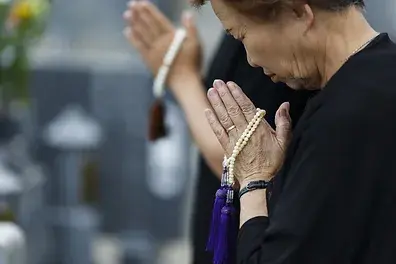
The ultimate goal is liberation:
Moksha in Hinduism — release from rebirth, merging with the divine.
Nirvana in Buddhism — the cessation of suffering and ego illusion.
Famous yogis and lamas have reported recalling past lives, while Buddhist monks train in practices to consciously navigate the process of dying (phowa).
Ancient and Indigenous Beliefs

Ancient Egyptians prepared elaborate tombs and rituals to ensure a safe passage into the afterlife. The Greeks envisioned Hades as the underworld, with souls crossing the river Styx. Many Indigenous cultures see death as a transformation, where ancestors continue to guide the living.
For example, the Navajo honor chindi, the spirit essence left after death, while Māori traditions in New Zealand include powerful rituals for helping spirits journey onward.
Philosophical Perspectives on Death
Philosophers have long wrestled with the question: Does consciousness persist after death?
Plato argued that the soul is eternal, pre-existing before birth and surviving beyond death.
Epicurus, a materialist, insisted that “death is nothing to us,” since consciousness ends with the body.
Modern thinkers like Thomas Nagel and David Chalmers question the “hard problem of consciousness” — how subjective awareness arises from physical matter at all.
If science cannot yet explain what consciousness is, how can it definitively declare what happens to it after death?
Scientific Investigations into Life After Death
Near-Death Experiences (NDEs)
NDEs are among the most compelling phenomena in afterlife research. Across cultures and ages, people who were clinically dead or near death report strikingly similar experiences:

A bright, loving light
Feeling detached from the body
Encounters with deceased loved ones or spiritual beings
A panoramic life review
A deep sense of peace and transcendence Case Studies:
Dr. Eben Alexander, a neurosurgeon once skeptical of NDEs, fell into a coma from meningitis. He later described entering a realm of overwhelming love and light, meeting a divine presence, and returning with transformed beliefs about consciousness.
Pam Reynolds underwent a rare brain surgery with her body cooled, heartbeat stopped, and brain activity flatlined. Yet she later reported observing surgical details — later confirmed by medical staff — while also experiencing a tunnel of light and encounters with loved ones.
Researchers like Dr. Raymond Moody (Life After Life) and Dr. Bruce Greyson have collected thousands of NDEs, finding consistent themes across cultural, religious, and personal backgrounds.
While skeptics argue these may be brain-generated hallucinations, others note that many NDEs occur during flat EEG brain states, raising profound questions.
Reincarnation Cases and Past-Life Memories
At the University of Virginia, Dr. Ian Stevenson and later Dr. Jim Tucker documented over 2,500 cases of young children recalling past lives. Many provided verifiable details — names, locations, and circumstances they could not have otherwise known.

Examples:
A boy in India recalled being a shopkeeper in another town, later identifying his former family and shop.
In the U.S., a child named James Leininger described detailed memories of being a World War II pilot, later confirmed by military records.
Skeptics attribute these cases to coincidence, suggestion, or fabrication. Yet the sheer volume and consistency intrigue researchers — hinting that consciousness may survive bodily death.
Consciousness and Quantum Theory
Some scientists propose that consciousness is not just a brain byproduct but a fundamental property of the universe.
Quantum consciousness theories (Penrose & Hameroff) suggest the mind may function on a quantum level that could persist beyond physical death.
The simulation hypothesis posits that reality itself may be a kind of cosmic program, raising questions about what happens when the “avatar” dies.
Although speculative, these ideas expand the dialogue beyond strict materialism.
Personal Accounts and Cultural Narratives

Beyond academic studies, countless personal stories point toward life after death:
Deathbed visions: hospice workers often report patients seeing deceased loved ones welcoming them.
After-death communications (ADCs): people sense loved ones through dreams, smells, or physical signs.
Cultural folklore: Irish banshee wails, Japanese yūrei, and Hawaiian ‘aumakua (ancestral guardians) all reflect ways humans interpret post-death contact.
Such narratives, while subjective, shape how societies understand mortality — offering comfort, meaning, and continuity.
Conclusion
The mystery of what happens after death remains one of humanity’s greatest questions. Religious traditions offer structured answers: heaven, reincarnation, liberation. Philosophers continue to debate the essence of consciousness. Science uncovers remarkable stories of near-death experiences and reincarnation cases that defy easy explanation.

Perhaps the truth lies in a blend of perspectives — or in something we cannot yet imagine.
What is clear is that death does not silence curiosity. From ancient tombs to modern hospitals, from Plato’s dialogues to quantum physics, the search for understanding continues. And in that search, many find not just answers about death, but a deeper meaning for how to live.
Meta description (SEO): Explore religious beliefs, near-death experiences, reincarnation cases, and modern science on life after death. Are we more than our physical bodies?


Comments